
To achieve optimal reliability and accuracy the following parameters must be fulfilled:
- Even temperature in the target / measurement chamber
- Soundproof measurement chamber
- Little to no irregularities between the main rubber and the rubber band(s)
- Clean sensors
1. Even temperature in the target / measurement chamber
The target has front and rear temperature shields to reduce temperature differences in the measuring chamber. Direct sunlight on the rubber can cause large temperature changes and uneven temperatures within the chamber.
The shields reduce these changes and protect the rubber from UV radiation, which can accelerate material degradation.
Over time, shots wear through the centre of the shields. The foam inserts in the centre of the front shield take most of this wear and are inexpensive to replace. Replace them whenever the rubber bands are rotated. The shields themselves have a long service life. Replace the rear shield when the shot-out area becomes too large.
The rubber-coated foam inserts also help seal the measuring chamber, improving scoring accuracy and reducing rubber band wear.
Remove debris and dirt from the opening in the temperature shield before fitting a new foam insert.
2. Soundproof measurement chamber
The target is based on acoustic measuring principals. It is therefore important that the measuring chamber is absolutely soundproof, meaning that no acoustic noise can get into the chamber. The target rubber skin and the rubber band on the target serve this function.
Projectiles with supersonic speed generate a very powerful sound energy. It is therefore important that tears from ricochets are repaired. Big holes can be sealed with a rubber patch that is glued to the outside of the target rubber skin with contact adhesive. Smaller tears can be sealed with canvas tape. Contact adhesives will help to increase the grip of such repairs.
An unavoidable fact is wear and tear on the target rubber skin/rubber band from the shooting. After a while of shooting at the target, the holes behind the aiming mark have to be sealed. This is easily done by rotating the rubber band(s).
How often the rubber band must be rotated varies with the following factors:
- Projectile calibre and shape
- Spread of the shots. This usually comes down to:
- Shooter skill
- Shooting distance
Specific recommendations on rotation frequency are found in the "Rotating rubber bands" section.
Shots into the target frame can cause large holes in the measurement chamber if the rubber skin on the target looses contact with the frame. Inspect the frame when doing maintenance to ensure that this is not the case. If this has occured, repair the fault by removing any loose staples, wooden splinters and anything else that can disturb the repairs. Then fasten the rubber skin with staples, glue and canvas tape.
Delete3. Irregularities between the rubber band(s) and the rubber skin
Unevenness between the target rubber skin and the rubber band creates barriers for the sound that will affect the accuracy. It is very important to make sure that the target rubber skin lies nice and tight against the rubber band. If this is not the case it has one of the following causes and solution:
| Cause | Solution |
| The target rubber is old, worn or has lost its elasticity. | Retension the target rubber or replace it if necessary. See section 3.7 for tips on replacing the target rubber skin |
| The edge of the cut-out of the target rubber skin has been hit too many times. This will cause the rubber to hang into the measuring chamber of the target. | The target rubber skin must be replaced. As a temporary solution it can be trimmed with a scissor. Please note that the rubber band must cover the cut-out section at any time |
| Illustration of a nice and tight target rubber skin that lies closely against the rubber band. |

|
| Illustration of a poorly tightened or worn out rubber skin that is bulging away from the rubber band(s) |

|
4. Clean sensors
The H-target models require little - if any - cleaning of the sensors. However we recommend brushing off any debree on the sensors and vacuum dirt and debree inside the target when the rubber skin is replaced. We also recommend annual cleaning of the lower sensors as they are more exposed to dirt and debree. Be careful with the electronics inside the target when doing this.
Sensors are accessed by opening the inspection hatches at the bottom of the target.
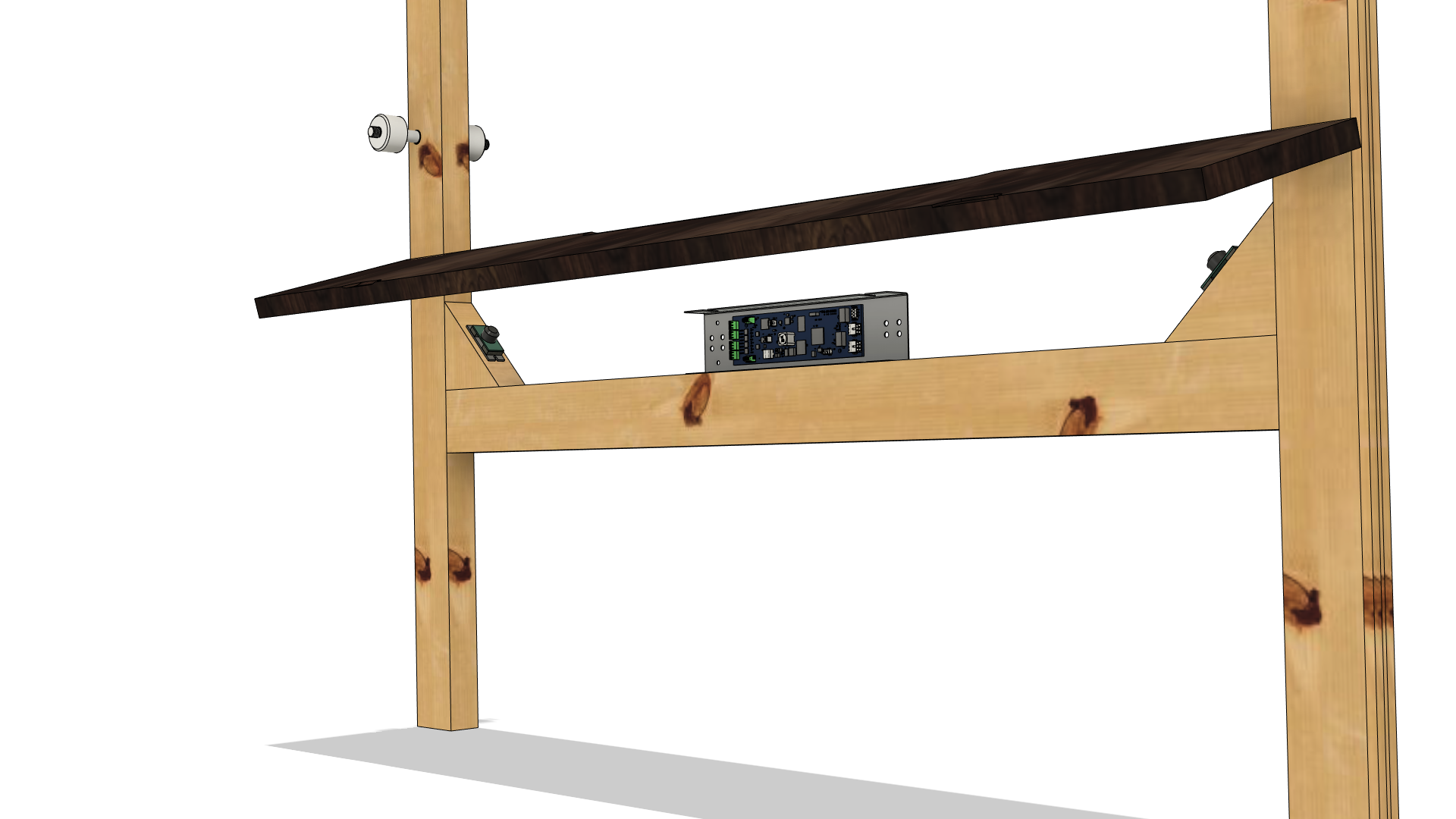 Sensors and electronics behind the service hatch
(Rubber skin removed for improved visibility)